Democratizing Quantum Venture Investing with Chris Sklarin
This is the New Quantum Era. I'm your host, Sebastian Hassinger. One of the themes we come back to a lot on this show is that quantum isn't gonna arrive as a single dramatic quantum supremacy moment. Instead, it's an ongoing distributed incremental story of scientific breakthroughs applied to technology developments. In a way, this set of engineering techniques collectively are enabling us to apply quantum level design and control broadly across industries, with potential economic value being created not just from quantum computing applications, but with communication, security, and sensing as well.
Sebastian Hassinger:But if you're an investor, especially an individual investor, how do you gain exposure to that value creation without betting the farm on a single qubit technology or a single public stock? And what does good quantum deal flow even look like at this stage when they're approaching a 100 hardware companies and even larger ecosystem of software and middleware plays? We're gonna talk with today with my guest, Chris Sklarin, about this topic. He is a managing partner at Alumni Ventures, one of the most active venture firms in The US and a pioneer in what they call democratizing venture capital for individual investors. Alumni Ventures raised over 1 and a half billion dollars for more than 11,000 individual LPs and built a portfolio of around 1,300 active companies, including a growing set of quantum investments across hardware, software, and applications.
Sebastian Hassinger:Chris and his colleagues are coinvestors along top tier leads, and they've been in names like Rigetti, Atom Computing, QControl, and Classique. They've ridden the wild volatility of public quantum stocks, leaned into early quantum sensing revenue, and watched NVIDIA put their portfolio companies on a GTC slide about hybrid quantum GPU ecosystems. In our conversation, we talk about how Alumni Ventures evaluates quantum startups, what they've learned from early exits and SPACs, where they see real commercial traction over the next three to five years, and how accredited investors can start seeing and learning from live quantum deal materials through Alumni Ventures Syndicate. I hope you enjoy our conversation.
Sebastian Hassinger:Chris, I'm very excited to have you on the show. So why don't you start by a quick personal introduction and and tell us a bit about Alumni Ventures?
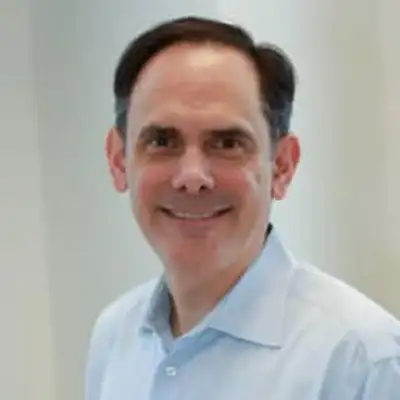
Chris Sklarin:Absolutely. Yeah. Great to join you, Sebastian. So I'm Chris Sklarin, a managing partner over at Alumni Ventures. And Alumni Ventures is about a ten year old, eleven year old firm, and we specialize, I'd say, in democratizing venture capital.
Chris Sklarin:So, you know, making venture capital available to individual investors. You know, we started off with a couple of very small funds and grew that to MIT, Harvard, and Yale. We're our second cohort after Dartmouth, was our start start starting fund. And to grow that to today, we're now, I think, over 11,000 individual We've investors have joined raised over 1,500,000,000.0, and we have, I think, 1,300 plus active portfolio companies. So really making us one of the most active venture firms, I think, globally, and and certainly the largest in The US for individuals.
Sebastian Hassinger:Yeah. Saw there's sort of a a list of of, you know, sort of awards. CB Insights, for example, 2024, you were on the list of top VC firms. So it's you're quite well known and notable.
Chris Sklarin:Yeah. It's nice to have some of those accolades. Yeah. It wasn't just wasn't just the CB Insights. They're they're they're absolutely PitchBook has ranked us consistently up there as an active venture firm.
Chris Sklarin:Stanford Graduate School of Business has ranked us in the top 50 unicorn I think Time Magazine last year, America's top 20 venture capital firm. So, yeah, nice Very nice. To have that recognition. Yeah. Myself personally, my backstory, I'm an engineer by training.
Chris Sklarin:I came out of MIT and worked in software after getting a six one degree. If you're not an MIT person, that means life engineering. Course six first. But I took a lot of software, so I ended up doing software as a career. Database, telecom, worked in a bunch of software startups.
Chris Sklarin:One was Inc five hundred number one, a couple IPO'd. And as I was working for those in this time, the telephony area, I was actually moved out west and got a a Berkeley MBA. So I started Hawes Berkeley out in Berkeley, California, which is a great place to be. Bay Area is lovely. And then moved back east and got on the venture side, and I've been doing venture now twenty plus years and was at the seed fund, another venture firm, a healthcare accelerator, a growth venture firm, and then joined Alumni Ventures back in 2017.
Chris Sklarin:So I'm just a little over eight years now with
Sebastian Hassinger:And one you said 11,000 investors, so these are individuals who get access to the deal flow on a deal by deal basis, or LPs, or a combination of both?
Chris Sklarin:A great question. Yeah. Most of them are individual investors jumping into funds. So I'd say it's 11,000 plus individual investors who have joined us in funds. And then the funds, not the traditional GPLP structure, but it's an LLC.
Chris Sklarin:They're they're part of the LLC. And then the fund owns the preferred equity, typically in companies. So my job is managing the funds, you know, and I advise the funds on what we buy, and my team there's about 10 of our teams, four investors sort of in each team, roughly. So about 40 investment professionals at alumni ventures. We have offices in Menlo Park, Chicago, New York, and I'm sitting in Boston.
Chris Sklarin:And then our headquarters in Manchester, New Hampshire. And then sort of beyond those 40 investment professionals, there's another sort of eighty, ninety people that are in the back offices, all either in those offices or up in Manchester.
Sebastian Hassinger:Great. And and you were saying that you you co invest. So some some other firm will take the lead, and then you co invest with them?
Chris Sklarin:Exactly right. Yeah. So so we're a co investor, always have been. We take our signals from that lead investor. What is the lead investor doing?
Chris Sklarin:What do they know about this area, this sector? How did this management team attract that lead investor? So that's a pretty strong signal. Why did IBM Ventures decide to invest in KEDMA's A round, right, for instance? Gil Capital, I think, in Israel as well.
Chris Sklarin:We were in the seed round with that company, for instance. So, you know, we got into the seed round. We knew somebody here at MIT, actually, one of the associate deans at the Sloan School, put us in touch with KEDMA, and we got a little check, you know, into that seed round several years ago. And then, you know, watch them, follow them on. We typically, in our alumni funds, have about 20%, 25% of our capital for follow on investments.
Chris Sklarin:So if that makes sense as a, you know, aggressive follow on for good growth, you know, then we can put some more money to work. So that's what happened in this this a round, I guess, last year.
Sebastian Hassinger:Right. And and so the the alumni in Alumni Ventures is both the the investor pool that you're drawing on, but also the founders. Right? Mean, you're you're looking at technologies that are are spinning out from universities, or or just alumni of universities who are happen to be founding a company.
Chris Sklarin:You know, the the most important thing here, Sebastian, is a great venture deal. So the alumni connection is a nice to have, and it's not always gonna be there. I'd say maybe, you know, at least half the deals will have some alumni connection to a particular school if it's in a particular alumni fund. But really, it could be the connection is, hey, Chris's team found it, and they're associated with the Castor Fund. Castor, you don't know, is Latin, French, and Spanish for beaver, nature's engineers, so Like many engineering schools, that is our mascot Yeah, at yeah, I was just on the phone with an entrepreneur yesterday, was from Caltech, he's like, yep, the Caltech beavers, right?
Chris Sklarin:And he was saying, you know, it really should be the Caltech quakes or something. Right? Because they have to fall. Yeah. Not
Sebastian Hassinger:a not a great
Chris Sklarin:They also
Sebastian Hassinger:patron for engineers, earthquakes though.
Chris Sklarin:Yeah. Yeah. But whenever there's a quake, all the all the trucks fall at the Caltech and the engineering That's true. Geology department. Like, because they
Sebastian Hassinger:know. True.
Sebastian Hassinger:So you've got, as you said, 1,300 portfolio companies across a wide range of categories, but you do have a significant set of investments in in the quantum space. Right?
Chris Sklarin:Yeah. It's exciting. We have, I think, five or six investments. Actually, one just popped up on my radar screen today, literally announcing our investment today, a seed round. So that sort of ticked the number up by one.
Chris Sklarin:I think our original quantum investment was in Rigetti computing. So Rigetti was one that had a Yale connection, and I think our guy down the hall here, David, who's my compatriot running the Yale Fund, got into that deal. And we, you know, followed along to, I think, an a 16 z investment. I think we doubled down when Bessemer invested later on and got more money to work. And, you know, that was quite a ride, up and down and all around.
Chris Sklarin:And but last year, right, last year was a big year in quantum. Willow chip announcement, other things that were going on. Rigetti has some good news. And so we were able to ride that SPAC, that public stock at that point up, and we were able to sell a bunch in Q four, and a little more in '25, and we returned a good amount of
Sebastian Hassinger:money there. Good timing on the
Chris Sklarin:exit Yes. That worked out reasonably well for us, And I will say that we are definitely following like like many of the investors, we always follow our former CEOs. What are they doing and what's going on? And so I know he's doing a new company now. We're keeping a close eye on that new company, Sigledry.
Chris Sklarin:So so, you know, that's a couple examples. I guess, you know, we can get into other details, but I'd say in the AV portfolio, the the quantum sort of breaks down into several different categories. Right? We have hardware, software, and then maybe even applications. But on the hardware side, Rigetti.
Chris Sklarin:We have investments in atom computing, as Ana do. On the software side, KEDMA. We've talked about KEDMA a little bit, the quantum error correction and mitigation company out of Israel, but also we have Q Control, I think they're out of Australia, Classique, and this new one that I just saw pop So up, a v a I q u
Sebastian Hassinger:There's gotta be a Q.
Chris Sklarin:And then there's an application. Yeah. Yeah. In there somewhere. On the application side, Boson, Q, Son, there's a bunch from that point of view.
Chris Sklarin:Not not all those are in my particular fund, but I am I am running our sort of what we call the quantum syndicate. So if people wanna sign up and look at deals one by one, they can sign up for the alumni venture syndicate and look at lots of different deals across all kinds of areas. But they can also specify, hey, I like health tech, or hey, I like quantum computing, and get the Quantum deal flow in particular to their their inbox.
Sebastian Hassinger:So one of the reasons why I wanted to have you on was because this past year, as you already referred to, with the the wild ride for Rigetti and and several pieces of good news, not just Willow, but but a number of other notable sort of advances seem to have, you know, lit a fire underneath the the quantum stocks or a number of of companies that are public, but then even the private valuations seem to be increasing. But I I saw a presentation at q two b by an analyst from Evercore who was pointing out that there it's quite barbell shaped. Right? There's a small number of companies that have raised a lot of capital, and then a couple 100 companies that are in the, you know, the the very small amounts. And do you have a sense for what that dynamic is is you know, is that something that's gonna persist?
Sebastian Hassinger:Are we gonna see some sort of phase change as that barbell structure changes? How do you how do you see this sort of, you know, the coming months and years in this in this space?
Chris Sklarin:Well, I'm I'm I'm loathe to pro sorry, prognosticate, like, what exactly will happen with capital flows. But but but that said, I think quantum is sort of entering an era where we're looking at companies that are really actually making a difference and actually generating revenue and solving real problems. So we're going from just the science experiment, which looks great in a lab, like, someone's put out a couple of qubits, here's two qubits, four qubits, six qubits, right, to companies that are really doing things beyond academic theory. So, like, on technology, QControl, they've moved well beyond academic into this production grade software that can now do things like error suppression, pulse opposition diagnostics, and they're being used for things in the quantum sensing world, like to do GPS denied navigation. So they've got real customers, and they're doing real things.
Chris Sklarin:And I think we're gonna see that kind of move from companies where they actually are doing things that actually do open up revenue streams. And, of course, investors love to see a revenue stream other than just, like, invest in me in, you know, five, ten, fifteen years, we'll have something. Because we have funds, and the funds are typically ten year funds. Right? So we kinda need to need to see some investment.
Chris Sklarin:I think another big signal I don't know if you saw this, but let me see if I got the right the right file open. Here we go. It was last fall, Jensen Huang at the GTC twenty twenty five had a slide behind him, his big keynote presentation. Well, on that slide, he had NVIDIA building a hybrid quantum slash DTU computing ecosystem. Right?
Chris Sklarin:On that slide, we had in the alumni ventures portfolio, Atom computing, class c, and Rigetti showing up. And NVIDIA is not gonna put up a slide with science projects on. Like, they're gonna deeply embed. Deeply embed. Right?
Chris Sklarin:Right next to the GPU, there's gonna be a quantum processor. Right? And somehow, you're gonna hand off AI workloads when they're appropriate to the quantum processor and let the quantum do the thing it can do really well, and then let the GPU do what it will do. And then we had this we had this Merry Christmas announcement, right, twenty fourth? Don't know if you saw that about Grok, the
Sebastian Hassinger:chip company. Yeah. That's right. Yeah.
Chris Sklarin:So a $20,000,000,000 commercial deal, nonexclusive deal with Grok, the chip company. Now, they're not Quantum. No. Yeah. That's classical computing.
Chris Sklarin:Right? They're the inventors of the language processing unit. Happens to be in my Caster Ventures five Congratulations. So I am I am very acutely aware of this deal, and I'm waiting to see what's gonna come of that 20,000,000,000. But that's gonna be tightly embedded now in NVIDIA.
Chris Sklarin:So those will be doing some workloads. Right? The NVIDIA technology is gonna take that on, and NVIDIA's gonna use the quantum things. And so it's very, very interesting. I think there's gonna be real commercial progress happening in the three to five year time frame, right, which is well within the sort of time frame for venture investors to be very excited.
Sebastian Hassinger:But if you're talking about three to five year time frame, then then that's gonna be you mentioned sensing. That would be more along the lines of sensing then because the the road maps Correct.
Chris Sklarin:Could take a while.
Sebastian Hassinger:The road maps for for like the number of logical qubits it takes to to make a system that that is just purely not simulatable classically is still it's in that three to five year range, but it's it's towards the end of that three to five year range. Right? So things like sensing, Guan and Brilliance, who was on the the the podcast in December, mentioned their diamond nitro vacancy chips being used in sensing applications as well. Is that that what you think of sort of like almost supply chain or sensing applications as the the near term revenue opportunities?
Chris Sklarin:Yeah. I think people are gonna start to find various pieces that are gonna work. Whether it's Jensen Huang saying, hey, you can tightly couple with a GPU, and we'll hand things off to you. Or it's something like quantum sensing where it's, know, near term traction and revenue while they build a pipeline to get to the sort of long term. Even software companies like Kedma.
Chris Sklarin:Right? Kedma's working with various different hardware vendors and trying to make their hardware more effective and, you know, stable and do the error mitigation so it actually could be scaling to do real quantum, you know, advantage kind of software work. And, you know, it'll probably show up in Right? It'll probably show up in material science. It'll show up in point solutions to certain places.
Sebastian Hassinger:And that's what I meant by supply chain. So so, I mean, you know, in a sense, you're seeing, you know, that that one of the results of that barbell distribution is that companies like I and Q or, you know, what were the other ones? The the D Wave are are acquiring companies that are bringing IP into their portfolio to sort of enhance their product offering. So there's there's sort of a, you know, a hybridization and rich a cross pollination between companies within the the quantum space. Is that part of what you see as potential exits for for portfolio companies?
Chris Sklarin:Yeah. Absolutely could be. Yeah. Absolutely could be. I mean, we're looking at things, I think even last quarter, I haven't seen the outcome of this yet, but I think Xanadu, one of the portfolio companies in our portfolio, did a reverse merger went public.
Chris Sklarin:So there's that that kind of exit. You know, we're getting to the SPAC, and they they went that way to the public markets. But I think more and more of these companies that are able to get to real commercial traction using the quantum sensing while still building toward a full on quantum computer later on. Or if there's software companies that are middleware layers, like Haiku's is more software middleware, trying to make all kinds of different platforms.
Sebastian Hassinger:Well, I suppose there's an element of trying to hedge the risk in quantum computing that's fairly unique. Right? I mean, we've got a couple of things that have, you know, theoretically proved advantage, like Shores, or Grovers, or HHL. But on the whole, we don't really know for sure that we're gonna be able to build devices that deliver, you know, value to a financial services firm at at at scale. Right?
Sebastian Hassinger:Like the the kind of massive market opportunity. So when I think about software companies, a lot of them have found ways to do, you know, GPU or other HPC powered solutions in the near term. Do do you think that's sort of in response to sort of hedging that that kind of uncertainty in the quantum space?
Chris Sklarin:Yeah. I think that probably makes sense, and that they're gonna start to try and layer in quantum Right. When they can to prove that that can really super accelerate these problem
Sebastian Hassinger:Right.
Chris Sklarin:These problem sets. So if it's in finance, if it's in cryptography, wherever it is, they're gonna start layering in this additional hardware. I was pretty excited to see Jensen Huang put those, at that slide a conference. He's not one to just talk about science projects.
Sebastian Hassinger:Well, and you mentioned Grok, the chip manufacturer, like, the it it that does feel like another sort of result of the, I would say, more heterogeneous kind of compute landscape that's happening. Right? GPUs, TPUs, utilized inference engines from AWS and ARM architecture, Rock's architecture. It feels like there's this and then quantum in a in a sort of even more outside of the paradigm kind of effort. There's a lot this all feels like a response to sort of the breakdown of Moore's Law in just the straight CPU classical computing evolution.
Sebastian Hassinger:Is that how you see it?
Chris Sklarin:Yeah. To me, that's what really excites me is to see the quantum blending in. So to see this stuff blend together where we have really a hybrid compute structure that has classical and quantum blended together, and we'll take the best to then help accelerate the Right.
Sebastian Hassinger:Do you find I mean, there sort of unique challenges to to sort of trying to extract, you know, nascent IP out of a university lab? Because it you know, quantum is very much one foot still in the scientific labs. There's still fundamental research going on that is being drawn on directly. Is it, are there unique challenges in sort of trying to foster these companies out of out of that university setting in that very early stage?
Chris Sklarin:Well, from the deals that I've been involved with, I think the universities have been doing, you know, tech transfer for years and years, and they know how to do it. And and the investors demand, right, the easiest thing is a Delaware C Corp, etcetera. So, you know, the the the way to tech transfer and the way to spin out a company, pretty well known.
Sebastian Hassinger:Well, especially, you have the advantage of working with MIT and Those are two of the the best tech transfer along with Stanford. Sort of great track record.
Chris Sklarin:Yep. So so from that point of view, and they've all seen investor term sheets, they all know what the investors need, so I think I think that is pretty well trodden. Now we're trying to find, you know, investors that really know their stuff, and certain alumni ventures, we're not holding ourselves up as the experts. We are the co investor.
Sebastian Hassinger:Right.
Chris Sklarin:We're getting out there trying to talk to the researchers, talk to the entrepreneurs, talk to the investors, and find out you know, do a little three legged race here. Why is one getting with the other and and doing the diligence on that that sort of marriage?
Sebastian Hassinger:And when you're looking for deal flow now, are you is there do you have some sort of desired blend of software versus hardware or other or, you know, sensing versus security, other types of of categories you're looking for?
Chris Sklarin:Not in stone. I would say that we wanna be broadly diversified across stage, sector, and geography. So within quantum, we'd like to do a little bit of each of the categories, I would say. But really looking for that near term possibility of commercialization. And when I say near term, know, under ten years.
Chris Sklarin:Right? I'm not talking about the things that, hey, there's a whole new quantum computer, and here's a new hardware platform. But it was really kind of very fascinating to listen to the one from Diamond Brilliance, because that was like one I'd never heard of. So, like, Very interesting.
Sebastian Hassinger:Yeah. That's
Chris Sklarin:And also
Sebastian Hassinger:Yeah. So
Chris Sklarin:very very exciting from a point
Sebastian Hassinger:of view. Yeah. Very. Yeah. I mean, it it's, you know, it feels like, if anything, we're seeing more novelty, more diversification in the hardware landscape.
Sebastian Hassinger:There's something like close to a 100 hardware companies now building their own approaches to to qubits, and that's up even from earlier this year. Think Bob Soudre does a a report, and I think in I think it was March, he counted something like 70, and then in August, he counted like 90 something. So it it's I know. The the growth is really extraordinary, and it just I think about, like, how challenging that is from an investment standpoint when you've got you know, we're in a way, we're somewhere between the vacuum tube and the transistor, and we're trying to pick winners out of these radically different ideas about how to build a quantum a unit of quantum computation. Right?
Sebastian Hassinger:I mean, is that do you have a strategy, I guess, for for trying to deal with that that level of uncertainty in this this space?
Chris Sklarin:Yeah, mean, I I again go back to being I'm co trying to be Fair. Get out there and see what is getting funded, and who's getting a I'm term always amazed at the innovation that that we see in the entrepreneurs, and their their intrepid natures of getting out there and figuring it out. I talked to an entrepreneur a few days ago, was in the agricultural ag tech space, so literally helping folks and farmers, you know, do a better job, and this was happened to be in poultry. He was taking his insights from aerospace, and they literally are doing fluid flow in aerospace, and he was a Caltech PhD. And it's like, okay, fluid flow in aerospace, where they measure sand going across, you know, they they have lasers that can show the sand particles going across an airfoil wing, and somehow he's using that to then measure livestock.
Chris Sklarin:And it's like, well, if we can measure a grain of sand as it's going by, we can measure livestock. So, you know, applying something from one area and taking it to another usually can be can be really, really special. So I think in quantum, it's gonna be the same way. They like have these problems that have never been able to be solved classically. Oh, but if we can solve it with a quantum, we have this extra oomph on the processing power.
Chris Sklarin:Here's what we can do. So it's really exciting to see the the new problems that people are able to attack.
Sebastian Hassinger:Yeah, absolutely. Absolutely. And so are do you you mentioned because there's an alumni angle, but but again, I just come back to the fact that, you know, I mean, if you look at Yale, Harvard, MIT, all three of them have incredibly strong quantum information science programs. Right? Yale has now is the originator for the, you know, the not only Chad, but also Jay Gambetta and Alexander Blaise up at University of Sherbrooke, and and and is part of the Nord Quantique startup up there.
Sebastian Hassinger:So do you think that there's almost a clustering around the universities that you're more tightly affiliated with that that gives you an advantage in terms of of deal flow?
Chris Sklarin:You know, I'd say our advantage is that network effect. We have about 800,000 people in our Alumni Ventures network, 11,000 investors who actually put money with us, and and then of our CEOs, you know, we've probably been in, like I said, 1,300 current portfolio companies. So really getting deal flow from that CEO network, and so I find that is the most advantageous thing to me, to sourcing deals, is talking to them in the marketplace and saying, who do you see out there who's doing really interesting things? And, you know, that isn't necessarily all quantum, but it could be across a range of industries. And then certainly, yes, we do troll the hallways and talk to people at labs and go to the MIT Industrial Liaison Program events and things, so we definitely go to conferences and and try and also be present present there.
Chris Sklarin:So that that's really super helpful. But I I think our CEOs are the biggest source of great deal flow. Right.
Sebastian Hassinger:And in looking ahead, I mean, as we mentioned before, the last twelve months has been a wild ride in the public markets for for Quantum stocks. Part of that seems to have been sort of the the catalyst of these news items and and a growing awareness of quantum being, you know, the next big thing, one of the potential next big things. But there's also, you know, the I've heard it suggested that there's a just a purely mechanical sort of volume aspect to this where there's enough volume where the quant traders are are now attracted to it as a segment, and that that's driving some of the volatility. Do you do you think that's true? And do you think that that if there's more participation and more companies that that will sort of mature out of that quant driven volatility in the segment?
Chris Sklarin:Yeah. I mean, it's hard to to comment on the public stock nature of it. I think people are saying, you know, is is quantum the next Right. Major tech wave? You know, is that true beyond AI?
Chris Sklarin:And how do you think about it? And to me, I think, yes, it's a major future computing wave, but don't treat it as a sort of near term successor to AI. You know, it's a complementary longer duration sort of infrastructure build, and it's sort of AI scaled because it rode on top of mature classical Quantum, it's different. Right? The hardware, the software, the talent stack, they're all sort of being built right now at the same time.
Chris Sklarin:So the way I think about it, and investors I think should think about quantum, is sort of like optionality and sequencing. Like the upside could be enormous, but it'll arrive unevenly. It'll start with narrow domains, like we talked about optimization, sensing, security, the scientific simulation for maybe chemistry, material science. It's often, I think, to be embedded inside classical or AI workflows rather than replacing them, so they'll be embedded in there. And so the value creation, it won't look like a single breakout moment.
Chris Sklarin:It it'll show up incrementally, like little places. Quantum changes the economics of the specific problem. And so for me, from a venture perspective, I gotta be very disciplined. Like, most private companies aren't necessarily the ones promising sweeping disruption or unrealistic timeline, right? But they create value even if the fault tolerant quantum takes longer than expected.
Chris Sklarin:So I keep framing it that way for Quantum is a long term platform, near term pockets of usefulness, and then, you know, participate in the upside without getting ahead of
Sebastian Hassinger:ahead of the really good advice. It's sort of like, don't look for the spreadsheet of quantum computing, but look for, you know, an Airbus or a Boeing or a BMW coming up with a, a change in economics, making it more durable or a cheaper input into their high dollar products that starts to give them a competitive advantage in some way. Yeah, that's really smart. And I mean that that seems like a very good advice in general to sort of not over index on the way that we have been sort of experiencing and viewing and analyzing emerging technology trends over the last say, ten, twenty years because this is really a net new thing. As you said, it's it's not going to be it won't you know, when it starts to arrive in in earnest, it won't look like previous waves of technology.
Sebastian Hassinger:And that just seems, you know, it it's it's a incredibly challenging investment environment, and it's the kind of thing that that, you know, venture in particular almost seems designed for. Do you think that's that's sort of part of the the the role of venture is to be that that sort of pioneering guide through that kind of landscape?
Chris Sklarin:Yeah. Think so. I mean, venture has always been about disruptive technologies, and you can think back, I don't know, back twenty years ago, nanotechnology is coming out. Everyone's like, who's gonna invest in nano? What's nano gonna do?
Chris Sklarin:And really, was enabling technology. Right? We we invested in various different material science plays, etcetera, and now, you know, you can buy yourself a pair of khakis and you spill coffee on it and it rolls off. It's the most mundane thing ever. But you're like, oh, nanotechnology.
Chris Sklarin:And it's built right in. And it's gonna be advances like that. It's just like little things that happen. So little things that happen to help increase the usability of whatever the product or service is that they
Sebastian Hassinger:Well, think it's a great model for given that kind of complexity, the the type of democratizing access to venture investing that you're doing at alumni seems like a a terrific way to to approach it, and a great sort of option for people to look at. And you were saying that that you can now join Alumni Ventures just sort of with with no pre commitment, just to start looking at deal flow
Chris Sklarin:Right.
Sebastian Hassinger:As an individual.
Chris Sklarin:Exactly. You just have to log in, go to aab.bc, that's our website. You can go to if you like my fund, to Castor, c a s t o r, and you can scroll down and join for free, and then you're joining our Alumni Ventures Syndicate, And you can, you know, check off various options. So for this podcast audience, check off the Quantum option. Right?
Chris Sklarin:So you wanna get interested deals in Quantum. But then, yeah, you just basically self attest that you're accredited and, you know, go through a waiting period. Anything you view when you go into our deal portal, every deal you view, it's gonna be, you know, under non disclosure. You aren't supposed to spread that around the world, right? Your name, your IP address, your email address is watermarked on the due diligence, I don't know.
Chris Sklarin:But you can look at deals one by one. It's a very low minimum to get in. You can do a deal. I encourage people to do deals in the fund, so if they join a fund, again, a very low minimum, but then we're gonna do 20 to 30 deals in a fund year, and that gets you diversified because it's a power law asset class, and it makes sense to be in a lot of deals to have the winners show up. So I would encourage everybody to do some funds, but they can certainly join the syndicate for free and look at deals more often
Sebastian Hassinger:I can Just on an educational basis, like being able to look at the deal materials individually, I think is really interesting at this stage of the the maturity maturation of the market. That's really really exciting.
Chris Sklarin:Yeah. It's exciting, and it's exactly the same document I share with my colleagues. So whenever we do a deal, there's usually a sibling fund, you know. If I'm doing a deal, then maybe my colleague down the hall, Laura or David, will be tagged on that deal, and their team's gonna also possibly invest, and so they gotta score the deal. So you know, it's the same document we're sharing with them to sort of talk that deal.
Chris Sklarin:That's great. And it's great education for people who want to learn, you know, more about venture capital.
Sebastian Hassinger:Well Chris, this has been really interesting. I appreciate your time, and thanks for joining. Any any last comment or or insight you wanna leave us with?
Chris Sklarin:Well, I just say it's an exciting time exciting time to be in Venture. You know, I think we're preparing for a future where the quantum accelerators, right, are not in, you know, standalone, but they're really gonna be, like we said, inside the AI and HPC workflows. So I think that's the most exciting stuff, and, you know, Quantum's transitioning from speculative research to sort of strategic infrastructure planning. So that's exactly the inflection point I think we as investors are looking for, even with timelines being long. So exciting to talk to you, and thanks thanks for the opportunity.
Sebastian Hassinger:Thank you very much.
Sebastian Hassinger:Thank you for listening to another episode of the podcast, a production of the New Quantum Era hosted by me, Sebastian Hassinger, with theme music by OCH. You can find past episodes on www.newquantumera.com or on blue sky at newquantumera.com. If you enjoy the podcast, please subscribe and tell your quantum curious friends to give it a listen.
Creators and Guests